
You’ve packed lunch for a road trip only to find your sandwich soggy at lunchtime. You’re not alone — wet bread and runny fillings ruin meals and mood. This guide shows you how to make sandwiches that travel well without getting soggy, so your sandwich stays crisp, tasty, and ready when you are. You’ll learn quick tricks, packing tips, and foolproof combos you can make ahead.
What You'll Need for Sandwiches That Travel Well
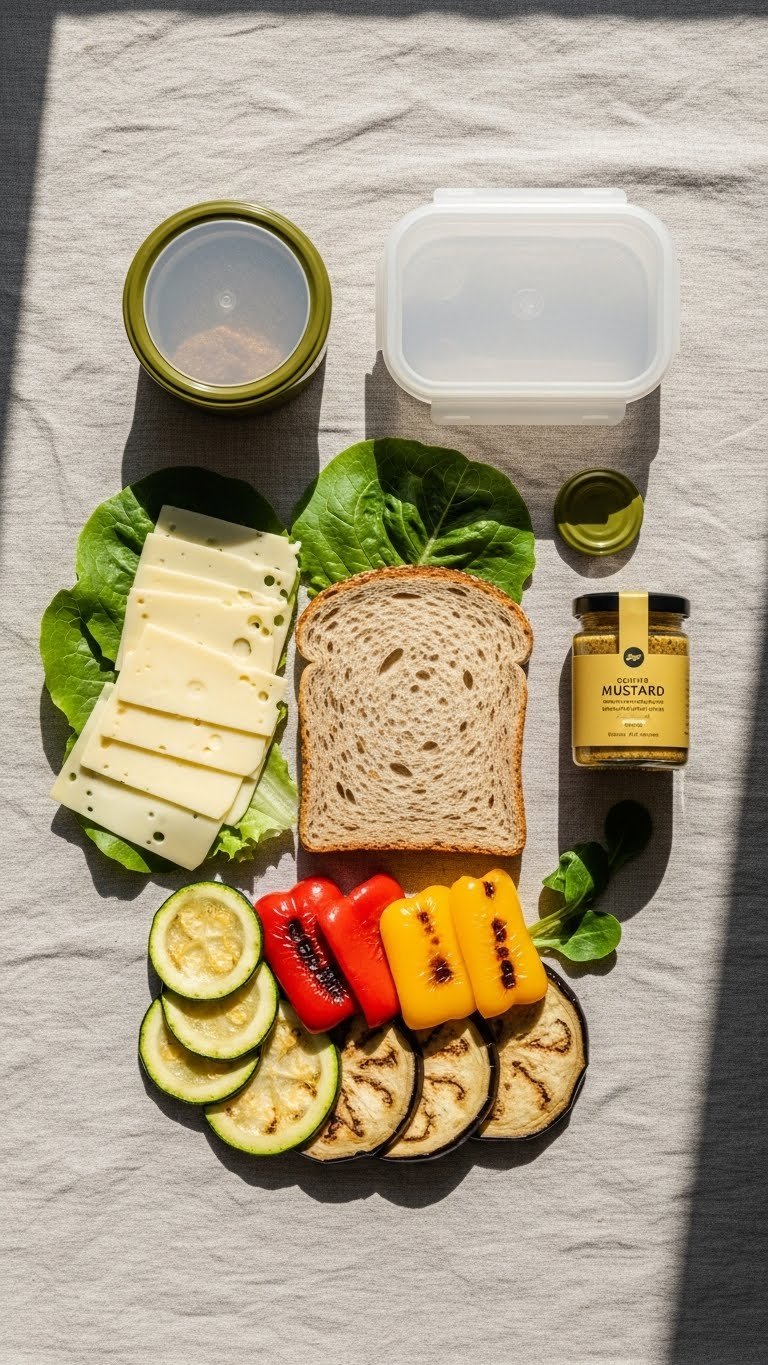
Start with the right tools and fresh ingredients. Use sturdy bread and dry toppings to prevent moisture transfer.
- Bread: sourdough, ciabatta, or sturdy whole-grain slices
- Spreads: small amounts of butter, mayonnaise, or mustard
- Separators: lettuce, cheese slices, or wax paper
- Containers: airtight boxes, silicone bags, or reusable wraps
- Chill options: ice packs and insulated lunch bag
Tip: Toast bread for 1–2 minutes to add a moisture barrier and extra structure.
Preparing Ingredients to Prevent Sogginess
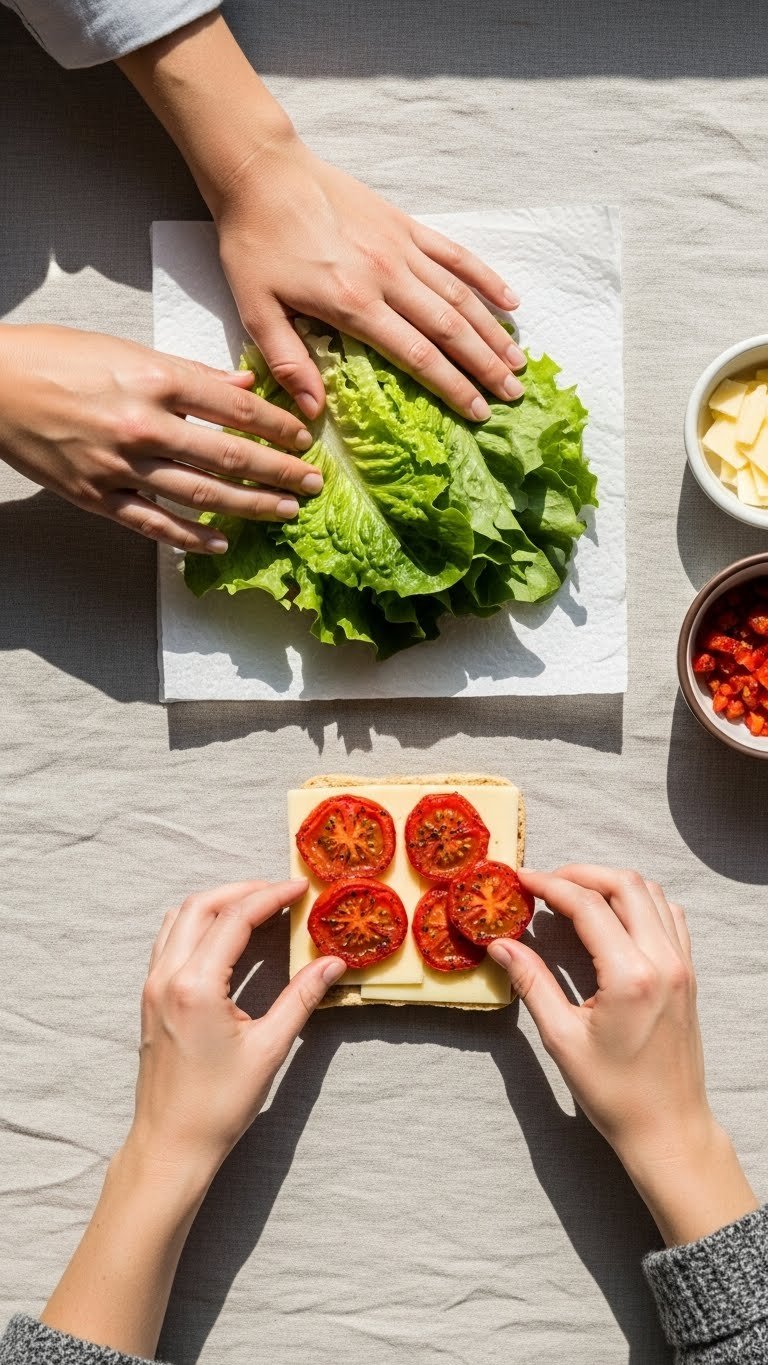
Prep saves your sandwich. Dry wet ingredients well and build layers that block moisture.
- Pat greens and tomatoes dry with a paper towel.
- Roast tomatoes or use sun-dried versions to reduce juiciness.
- Lightly spread butter or a thin layer of cream cheese on bread first to create a moisture barrier.
- Add denser ingredients (cheese, meats) next, then wetter items like pickles or hummus.
Quick tip: Use a single tablespoon of wet spread per sandwich side. Too much creates sogginess.
Assembling and Packing for Travel
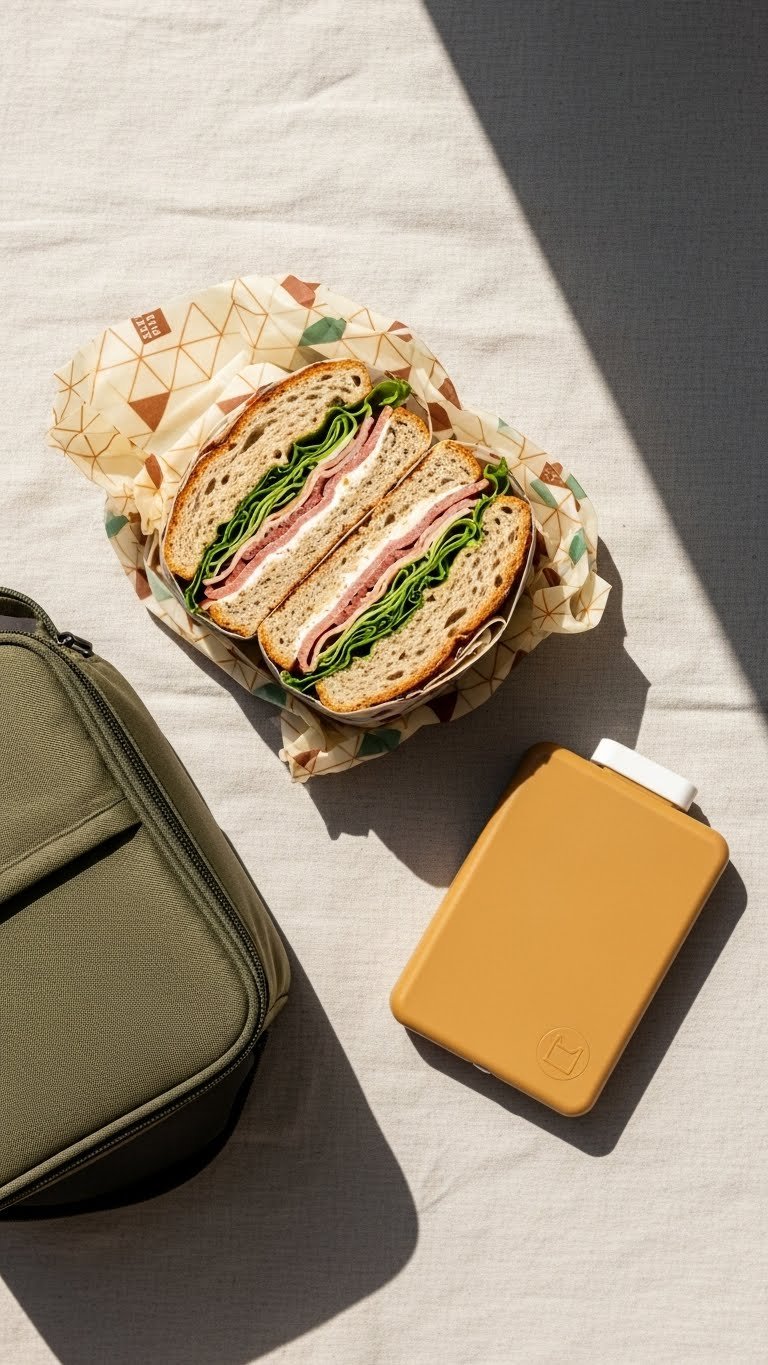
How you assemble and pack matters as much as ingredients. Follow these steps for a sandwich that survives the trip.
- Layering order:
- Bread with thin spread (butter/mayo)
- Cheese or thick protein (chicken, turkey)
- Dry vegetables (lettuce, spinach)
- Wet add-ons in the center (tomato slices, pickles)
- Cut sandwich diagonally to make fitting into containers easier.
- Wrap snugly in parchment or beeswax wrap to keep shape.
- Place in an airtight container with an ice pack if travel exceeds 2 hours.
- Store upright if possible to avoid compression.
Warning: Avoid adding dressings directly to greens. Pack dressings separately in a small container and add at mealtime.
Make-Ahead Strategies and Troubleshooting
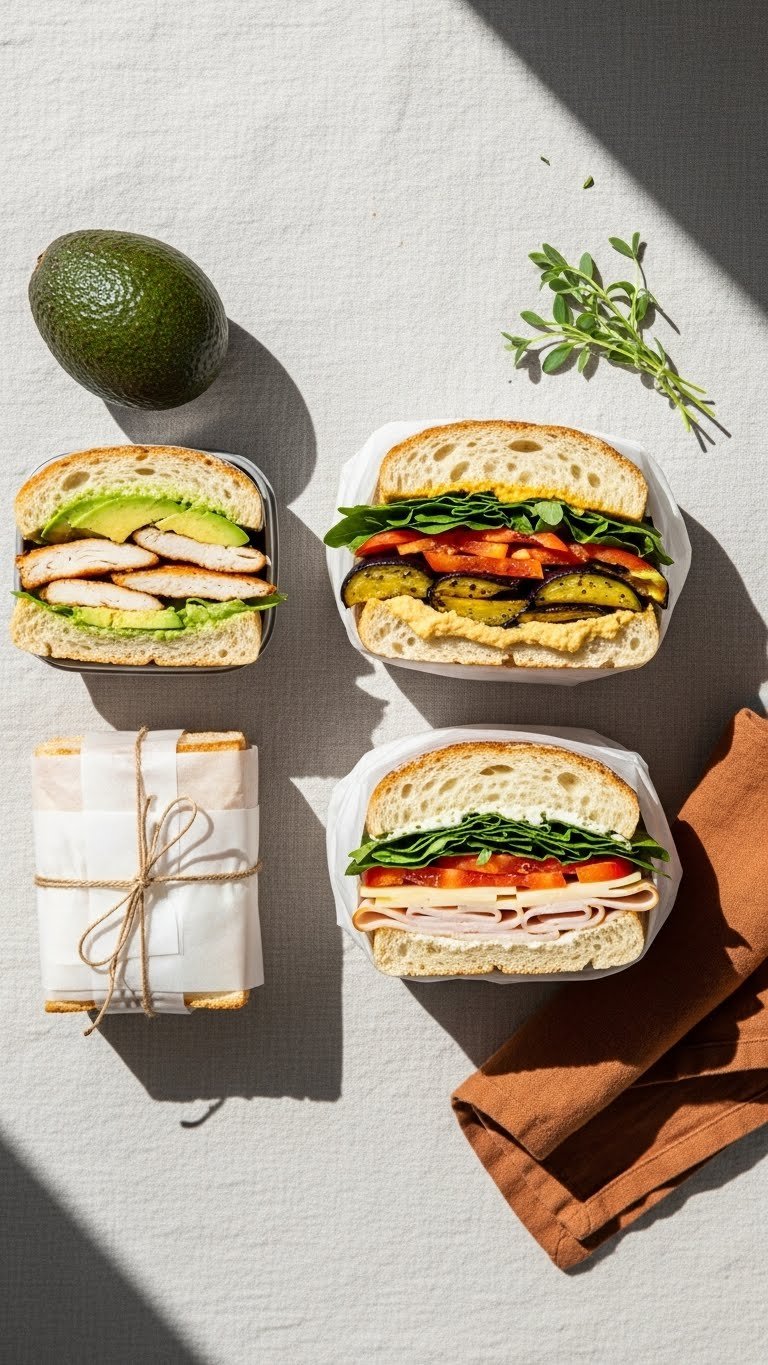
Make-ahead sandwiches can be ready-to-go without sogginess.
- Refrigerate sandwiches up to 24 hours when packed with an ice pack.
- For longer trips (over 4 hours), pack components separately and assemble on arrival.
- If bread softens, toast or pan-fry lightly before serving to refresh texture.
- Common mistakes:
- Using too much wet spread — use 1 tbsp max.
- Layering wet items next to bread — always place a barrier.
- Packing warm ingredients without cooling — cool to room temperature first.
Try these variations:
- Hummus + roasted peppers + arugula
- Turkey + Swiss + apple slices (apples add crunch but keep them in the center)
You now know how to make sandwiches that travel well without getting soggy. Keep your spreads light, use barriers like cheese or lettuce, and pack thoughtfully with ice packs and airtight containers. These small steps make a big difference for travel lunches.
Pin this guide for your next trip! Save this for later and share with friends who need better road-trip lunches. Which tip will you try first? Ready to make this happen? Let's do it!